The global e-commerce market is expanding at an unprecedented rate. As of 2025, there are 2.77 billion online shoppers globally, accounting for 33% of the world’s population—a 2.2% increase from the previous year. The number of online shoppers is expected to reach 2.86 billion by 2026, fueled by increasing internet penetration and shopping convenience.
By 2025, 21% of all retail purchases will take place online, marking the highest share of e-commerce in retail history. This number is set to grow to 22.6% by 2027. The total e-commerce sales will surpass $6.8 trillion in 2025, and with over 28 million e-commerce stores worldwide, competition is fierce.
How Do Online Shoppers Make Purchasing Decisions?
- 44% start their shopping journey on search engines, while 41% go directly to online stores like Amazon or a business’s website.
- 83% of shoppers research online before visiting a store.
- 34% shop online at least once a week.
- 99% of consumers check reviews before making a purchase.
- Social media is the starting point for 14% of online shoppers.
With millions of e-commerce stores competing for consumer attention, content marketing and digital branding have become the driving forces behind successful online businesses. According to industry reports, 81% of e-commerce businesses rely on content marketing for branding and performance marketing, leveraging SEO, social media, influencer collaborations, and paid campaigns to attract and convert buyers. But how does content writing for ecommerce fit into the buyer’s purchase lifecycle?
How Content Aligns with the Buyer’s Purchase Lifecycle?
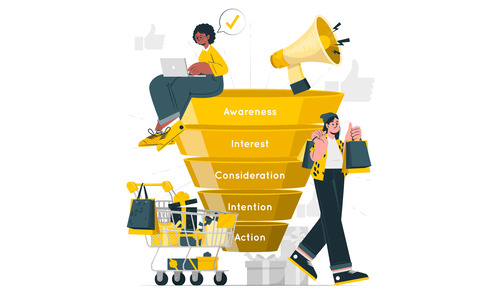
Many underestimate the strategic role of content in the marketing funnel. Having worked in the e-commerce industry for more than a decade, I’ve observed firsthand how every piece of content plays a crucial role in guiding the consumer from awareness to purchase—and beyond.
1. Awareness Stage (Top of the Funnel)
93% of online experiences begin with a search engine, making top-of-the-funnel content crucial for visibility. At this stage, potential buyers are just realizing their needs. They are searching for information, and this is where educational and informative content shines.
- Blog Posts & Articles – Optimized for search engines, these help attract organic traffic.
- Social Media Content – Engages audiences and builds brand recognition.
- Press Releases – Creates brand credibility and visibility.
- Keyword-Focused Pages – Ensures high ranking in search results, driving traffic.
2. Consideration Stage (Middle of the Funnel)
71% of consumers are more likely to make a purchase based on social media referrals. Here, consumers are evaluating their options. They compare products, read reviews, and seek recommendations.
- Category Pages – Well-structured category pages enhance user navigation.
- Influencer & Affiliate Content – Helps build trust through third-party endorsements.
- Marketplace Content – Ensures brand presence on platforms like Amazon, Flipkart, etc.
- Email Marketing – Nurtures leads with personalized recommendations.
3. Conversion Stage (Bottom of the Funnel)
E-commerce conversion rates range from 1.5% to 3%, and well-optimized product pages can improve this by 30%. Now, the customer is ready to buy. The focus here is on persuasive content that drives action.
- Product Descriptions – Well-crafted descriptions enhance clarity and boost conversions.
- Landing Pages – Optimized pages designed to convert visitors into buyers.
- Ad Copies & Banners – Engaging ads help in retargeting and pushing conversions.
- User-Generated Content (UGC) – Authentic customer reviews increase trust.
4. Retention & Loyalty Stage
Acquiring a customer is only half the battle; keeping them engaged ensures long-term profitability. Loyal customers are 60-70% more likely to make repeat purchases compared to new customers. You can use the following content writing for ecommerce strategies to improve retention.
- Email Marketing – Personalized content keeps customers engaged.
- Social Media Engagement – Regular interactions create brand loyalty.
- User-Generated Content – Encourages community-building and repeat purchases.
Types of Content for Ecommerce and Their Role in the Marketing Funnel
1. Product Descriptions (Bottom of the Funnel – Conversion Stage)
Product descriptions play a critical role in converting visitors into buyers. A well-crafted product description provides essential details, answers customer queries, and influences purchase decisions. 87% of consumers rate product content as extremely important when making a purchase decision.
Why Are Product Descriptions Important?
- Help boost SEO and drive organic traffic
- Increases conversation rates
- Provides accurate and engaging product information improving customer experience
By crafting compelling, informative, and optimized product descriptions, e-commerce businesses can significantly boost their bottom-funnel conversions and create a seamless buying experience.
2. Landing Pages (Middle to Bottom of the Funnel – Decision & Conversion Stage)
Landing pages are designed to capture leads and drive sales by providing targeted messaging and persuasive calls to action. Well-optimized landing pages can increase conversions by up to 300%.
Why Are Landing Pages Important?
- Drive targeted traffic and increase conversions
- Improve ad campaign effectiveness
- Provide a clear call-to-action (CTA) to encourage purchases
3. Category Pages (Middle of the Funnel – Consideration Stage)
Category pages help users navigate products efficiently, improving engagement and conversions. 43% of e-commerce site visitors use category navigation to browse products.
Why Are Category Pages Important?
- Improve site structure and user experience
- Help search engines index products effectively
- Encourage product discovery and reduce bounce rates
4. Keyword-Focused Custom Pages (Top to Middle of the Funnel – Awareness & Consideration Stage)
These pages are optimized for search queries, improving SEO rankings and organic visibility. Organic search drives 53% of website traffic.
Why Are Keyword-Focused Pages Important?
- Improve search engine rankings and attract potential buyers
- Target specific customer needs and pain points
- Increase website authority and credibility
5. Blog Posts (Top to Middle of the Funnel – Awareness & Engagement Stage)

Blog posts help attract and engage potential buyers by answering their questions, providing insights, and positioning the brand as an industry expert. Businesses that blog generate 67% more leads than those that don’t.
Why Are Blog Posts Important?
- Improve SEO and increase website traffic
- Educate customers and build brand trust
- Generate leads and nurture potential buyers
6. Email Marketing Content (Middle to Bottom of the Funnel – Engagement & Retention Stage)
Email marketing keeps customers engaged, encourages repeat purchases, and drives customer retention. For every $1 spent on email marketing, the average ROI is $42.
Why Is Email Marketing Important?
- Builds long-term customer relationships
- Increases sales through personalized offers
- Enhances customer engagement and retention
7. Affiliate & Influencer Content (Middle of the Funnel – Consideration Stage)
Affiliate marketing and influencer collaborations help build credibility and reach targeted audiences. Influencer marketing delivers 11 times higher ROI than traditional digital marketing.
Why Is Influencer Content Important?
- Increases brand trust and credibility
- Expands reach to a larger audience
- Boosts engagement and conversions
8. User-Generated Content (Bottom of the Funnel – Social Proof & Retention Stage)
UGC includes customer reviews, testimonials, and social media posts, which build trust and influence purchasing decisions. 79% of consumers say UGC highly impacts their purchase decisions.
Why Is UGC Important?
- Enhances brand credibility
- Encourages engagement and community building
- Increases conversions with authentic reviews
9. Social Media Content (Top to Bottom of the Funnel – Awareness to Conversion Stage)

Social media drives engagement, brand awareness, and direct conversions. 54% of users research products on social media.
Why Is Social Media Content Important?
- Increases brand visibility and engagement
- Drives website traffic and sales
- Builds community and customer loyalty
10. Ad Copies (Middle to Bottom of the Funnel – Lead Generation & Sales Stage)
Ad copies influence purchase decisions through compelling messaging and CTAs. Well-crafted ads can increase conversions by up to 80%.
Why Are Ad Copies Important?
- Capture attention quickly
- Drive conversions through persuasive messaging
- Improve ROI on paid campaigns
11. Marketplace Content (Bottom of the Funnel – Sales & Visibility Stage)
Marketplace content includes product listings on major e-commerce platforms like Amazon, eBay, and Flipkart. A well-optimized listing improves visibility, credibility, and sales. By leveraging marketplace content, businesses can maximize their reach and sales potential across multiple platforms.
Why is Marketplace Content Important?
- Enhances product discoverability in competitive markets
- Builds trust with shoppers through reviews and ratings
- Improves conversion rates with optimized listings
12. Press Releases (Top of the Funnel – Brand Awareness Stage)
Press releases help establish authority, increase brand visibility, and inform customers about new products, partnerships, or milestones. 70% of journalists consider press releases to be one of the most useful ways to receive story ideas. A well-distributed press release can significantly boost brand recognition and industry credibility.
Why Are Press Releases Important?
- Strengthen brand credibility and authority
- Improve search engine visibility through media coverage
- Generate backlinks and drive referral traffic
13. Banner & Image Content (Middle to Bottom of the Funnel – Conversion Stage)
Banners and image-based content are key visual assets that attract and engage potential buyers. They appear in ads, social media posts, email campaigns, and product pages to enhance conversion rates. People remember 65% of the visual content they see three days later, compared to only 10% of written content. By using high-quality and strategically placed banners and images, businesses can capture consumer interest and drive higher conversions.
Why is Banner & Image Content Important?
- Grabs attention and enhances brand recall
- Improves ad engagement and click-through rates
- Creates a visually appealing shopping experience
E-commerce is not just about selling; it’s about storytelling. A strong content strategy ensures that potential buyers don’t just find your brand but also trust it enough to convert and stay loyal. By aligning content with the buyer’s journey, businesses can drive awareness, engagement, conversions, and long-term brand loyalty.
Ready to level up your e-commerce content strategy?